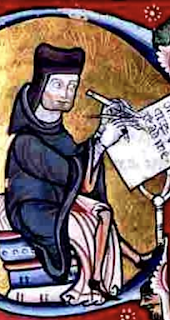
Showing posts with label Pope Alexander III. Show all posts

10 June 2026

The Finnish Crusades

Pope Alexander III decided that it was time to tackle the pagans on the southern shores of the Baltic Sea (the Baltic is between the peninsula that holds the Scandinavian countries and the mainland). His papal bull in 1171, Non parum animus noster (Our mind is deeply [troubled]), inspired several Christian countries and Christian military orders to take up the Cross.

Some of the peoples that were targets of these Crusades after the bull (and earlier, to be honest) were the Wends, the Finns, Livonians, Estonians, the Old Prussians, and the Lithuanians. I want to talk specifically about the Finns.

The earliest evidence of a Crusade against the Finns by Denmark comes from a speech given at Christmas 1187 by Esbern the Resolute (1127 - 1204), a chieftain, royal chancellor, and great-grandson of King Canute IV. At the age of 60 he encouraged young people to take up the Cross on behalf of Jerusalem, and mentioned a recent victory over the Finns.

Denmark had conquered at least part of Finland in its quest to increase its Christian population and gain more independent standing in the Church (Denmark was controlled by German archbishops, which Sweyn II tried to change). The Church was happy with Denmark making moves (as early as 1165) against Finns and Estonians.

Evidence is scarce, but it appears there was a Crusade by Danes against Finns in 1191 by King Canute VI (reigned 1182 - 1202); it gets mentioned several times, although details are lacking. A Crusade against the Finns in 1202 may have taken place, led by Bishop Anders Sunesen. Another possible Crusade has been mentioned for 1209.

Sweden also wanted to claim Finland as its own, and the two countries fought over the right to control Finland until 1216 when Pope Innocent III (1161 - 1216) declared that Finnish areas should be under the jurisdiction of Sweden rather than Denmark. Finland stayed part of Sweden until 1809, when the Finnish War was fought between Sweden and Russia, resulting in Finland becoming a grand duchy as part of Russia. Finland gained independence from Russia during the Russian Revolution of 1917, and joined the European Union in 1995 and NATO in 2023.

As for Pope Innocent III: he has more mentions in this blog than any other pope—he was, after all, one of the most powerful popes of the Middle Ages—but no entry of his own. Let's find out more about the man behind the influential Fourth Lateran Council tomorrow.

08 June 2026

Alexander III's Reign

In 1179, Pope Alexander III, now able to function as the recognized pope after his imperial-supported rival popes were suppressed, was in a position to summon clergy from all over to address some reforms in the Church.

The Third Council of the Lateran handled many topics, one of which involved Alexander's papal election itself. They decreed that no one could be elected pope without two-thirds of the cardinals. Once agreed to, it was intended to prevent situations such as he experienced, with a small faction of cardinals breaking away to elect their own pope.

It also decreed that education should be provided for free. In the Parochial School post I explained how Alexander declared that it was the duty of the Church to provide free education "in order that the poor, who cannot be assisted by their parents' means, may not be deprived of the opportunity of reading and proficiency."

The Council also made some changes that would affect all Christian countries. It expanded the Truce of God, the times when fighting was forbidden between Christian armies. He supported crusades against the pagans in Northern Europe, and approved forced conversion in the Baltic region (a cause taken up by Danish king Eric the Memorable).

He was friends with Thomas Becket, of course supporting Becket in his dispute with Henry II of England. (The illustration shows Alexander saying goodbye to Becket as he leaves to return to England.) He canonized Becket not long after the man's death, in 1173, which was seen as a rebuke to Henry. Alexander also canonized Bernard of Clairvaux and Edward the Confessor, although he did not beatify (the first step in recognizing that a person could be declared a saint) anyone during his pontificate.

There were problems for Christians and the Church in Finland; priests and the Church had no respect and were frequently harassed. Alexander's papal bull Non parum animus noster ("Our mind is deeply troubled") promoted a Crusade against pagan Estonians and Finns.

Finland hasn't been addressed in this blog except for references to lutefisk and so-called Moses coins. What was the far north like in the Middle Ages? Let's take a look next time.

07 June 2026

Pope Alexander III

A man born in Siena c.1100 grew up to make significant changes to the Roman Catholic Church. His name was Roland, and he studied theology at (probably) Bologna, according to Robert de Torigni. He was made a cardinal-deacon in October 1150 by Pope Eugene III, and a few years later he was the papal chancellor.

He was very busy in that role. He was the leader of the cardinals who opposed Holy Roman Emperor Frederick I Barbarossa. He negotiated the treaty between Pope Honorius II and Roger II of Sicily that ended hostilities between them. He was the initiator of a serious diplomatic incident when he delivered a message from the pope declaring that the Holy Roman Emperor was a vassal of the pope.

When Pope Adrian IV died in September 1159, there was disagreement over his successor. Roland was elected pope a week later and took the regnal name Alexander III. There was, however, a contingent of cardinals who were loyal to the Holy Roman Emperor Frederick, and elected a cardinal priest who took the name Victor IV and is now considered an antipope. (This was actually the second "Victor IV" to be declared an antipope. There was another a generation earlier.)

The emperor had a strong presence in Rome, and Alexander had to live outside of the city while fighting to establish his legitimacy. In 1161, the King of Hungary recognized Alexander as the true pope, followed by kings of France and England. Victor died in 1164, and (it is said) Alexander wept real tears for the death of a fellow cleric, scolding his followers who rejoiced at the news.

Victor was replaced, however, by more antipopes with imperial support: Paschal III and Calixtus III. When Frederick was defeated at the Battle of Legnano in 1176, his grasp on politics in the Italian peninsula waned. Alexander returned to Rome on 12 March 1178 to live out the remainder of his pontificate.

He was also now free to make changes, which I'll tell you about tomorrow.

06 June 2026

Eric the Memorable

After Niels, the fourth and last of the sons of Sweyn II to become kings of Denmark, died, the throne passed to the next generation; in this case to Eric II "the Memorable," son of Eric the Evergood.

Born c.1090 to King Eric I and an unknown woman (Eric had a wife, but like his father he consorted with other women), Eric rebelled against his uncle, King Niels, because Niels was considered neglectful as a king, leaving much of the administration to his queen, Margaret Fredkulla. Finally winning against Niels, Eric was made king on 25 June 1134.

Initially losing several battles against his predecessor, he had been name "Harefoot"; it meant "barefoot" and was a derogatory nickname linked to retreating from battle. Once he was elected king, "Harefoot" was replaced with "the Memorable" because of the extremely decisive victory against Niels in the last battle, the Battle of Fotevik, when German mercenaries on horseback took Niels' army by surprise. Denmark had never seen such a large-scale cavalry force.

Eric set about consolidating his power, giving titles and positions to his supporters. His half-brother, Canute Lavard (Eric I's legitimate son) had died in battle, and Eric set about to get him canonized. It is said he wanted to establish in Denmark the notion of the "divine right of kings" and felt making his brother a saint would help link religious loyalty to political loyalty. Canute was canonized in 1170 by Pope Alexander III.

Eric was ruthless to his enemies. He decided to conduct his own Crusade against a non-Christian people living on a Baltic island. He had his men dig a canal near their city that filled with water, draining the aquifer that the city relied on and forcing them to surrender or die from lack of water. He attacked Norway; unsuccessfully, but in the process he burned down Oslo.

His death comes to us in a story by a 16th-century historian, Arild Huitfeldt. At a landsting (meeting of the Danish parliament) in 1137, he was approached by Sorte Plov, a local nobleman carrying a spear that had a block of wood stuck on the tip to render it harmless. When Sorte Plov got close enough to see that Eric was not wearing armor or chainmail under his clothes, Sorte knock the block of wood off and thrust the spear through the king.

Eric's nephew Erik Håkonssøn was present, and drew his sword to deal with Sorte, but Sorte, knowing that Erik was next in the line of succession, pointed out that "A juicy piece of meat hath fallen in thy bowl!" Erik Håkonssøn was crowned Eric III of Denmark (Sorte escaped). (Eric did have an illegitimate son, Sweyn, who after Erik would become King Sweyn III of Denmark, sharing the reign with two other members of that generation of Sweyn II's descendants.)

I am shocked, I say, shocked to discover that I've never told you about Pope Alexander III, even though he has been mentioned several times in this blog. Let me introduce you tomorrow to the man.

19 March 2026

Roger de Moulins

Roger de Moulins was not known to history until 1177 when he became Grandmaster of the Knights Hospitaller. His chief concern seemed to be urging King Baldwin IV of Jerusalem to be aggressive in the war with Saladin.

Roger was part of the Battle of Montgisard (pictured) against the Ayyubid Sultanate (the dynasty founded by Saladin when he came to power). The fighting was fierce: Roger's own report was that 1100 men had been killed and a further 750 wounded. It was one of Saladin's few defeats, but completely redeemed by him at the Battle of Hattin ten years later.

The full name of the Hospitallers was Order of Knights of the Hospital of Saint John of Jerusalem. They had founded a hospital for the care of the sick and wounded in Jerusalem in 1113. The Order's increasing involvement in military affairs made them well-known and powerful, but distracted them from their original purpose. Their second Grandmaster, Raymond de Puy, had started them on a more military bearing.

Pope Alexander III issued a papal bull, declaring that they were not allowed to fight anyone unless attacked and urging the Order to focus on caring for the sick and the poor. Alexander also urged the Order to forget their rivalry with the Templars for the sake of unity in the Holy Land. The two Orders soon got together to negotiate a truce. The Orders, however, retained their rivalry.

Roger traveled Europe along with his Templar counterpart, Arnold of Torroja, and the Patriarch of Jerusalem Heraclius, to persuade Pope Lucius III and European nobles to form a new Crusade for the support of the Holy Land and to find a husband for Queen Sibylla to replace Guy of Lusignan. Roger also intended to establish the Hospitallers in England, France, and Germany.

Arnold died along the way. Roger clashed with Arnold's successor, Gerard de Ridefort, Templar and Marshall of the Kingdom of Jerusalem who supported Guy of Lusignan as husband for Queen Sibylla of Jerusalem. Roger had been given the privilege of holding the key to the royal treasury, and at first refused to turn it over to Guy when Guy was crowned King of Jerusalem.

In 1182, Roger made a significant and interesting change in the Order's statutes that changed the atmosphere surrounding it. I'll explain more tomorrow.

18 March 2026

Templars versus Hospitallers

In the 12th century, while the kingdoms established in the Holy Land by Western Europeans were struggling to maintain themselves against their Muslim neighbors, two of their chief means of support were the Knights Templar and the Knights Hospitaller. Each of these Orders had been recognized by popes, and their chief function was to provide safe escort for pilgrims.

This meant, of course, that they needed to be effective militarily. The Hospitallers additionally were supposed to provide care for the sick and injured; they had started with a hospital built in 1113 (right after the First Crusade) in Jerusalem on the site of the Benedictine monastery of St. John the Baptist.

Orders cannot live on faith, so they need donations and other means of financial support. One method of financial support was fighting. Each Order joined military excursions when asked, which allowed them to partake of the spoils of war. By the 1180s, the two Orders were public rivals.

Pope Alexander III (reigned 1159-1181) did not want their rivalry to create its own internal problem when all Christian forces in the Middle East needed to be united, so he called for mediation. He persuaded the two Orders to call a truce in 1179 and then set up a mechanism for resolving their differences. Before the mediation could be arranged, however, Alexander died. Pope Lucius III (reigned 1181-1185) presided over the mediation, along with King of Jerusalem Baldwin IV.

The respective Grandmasters of the Templars and Hospitallers, Arnold of Torroja and Roger de Moulins, chose three brothers from each of their Orders. Each brother had the right to choose two additional brothers. The brothers were to gather and find a negotiation on which they could agree to prevent inter-Order hostility. They would the bring their conclusions to the Grandmasters.

One thing they all agreed on: diocesan authorities were opposed to the privileges given to the military Orders. The Orders had privileges and immunities that secular clergy did not have. The Third Lateran Council of 1179 forbade the military Orders from accepting property and tithes unless the local diocesan authority (bishop) approved.

The two Orders resolved their differences, and two papal bulls forced the secular clergy to accept that the Templars and Hospitallers were important and excommunication would be the punishment for anyone attacking the knights.

Tomorrow I'll say a little more about Grandmaster Roger de Moulins and a big change for the Hospitallers.

16 March 2025

William of Tyre

The First Crusade founded several Christian territories in the East. In order of their founding, they were the County of Edessa, the Principality of Antioch, the Kingdom of Jerusalem, and the County of Tripoli.
The Kingdom of Jerusalem's first ruler was Godfrey of Bouillon. He and his successors expanded the borders of their kingdom, covering approximately where Israel, Palestine, and Lebanon are today.

This included the city of Tyre, the birthplace of William II of Tyre c.1130. Though growing up in Jerusalem, he went back to Europe to study Liberal Arts and canon law in the universities (where he knew a man named Hilary who studied Classical literature while William was there). He studied theology in Paris under Peter Lombard (whose writings became the standard for theological education) and Bologna (probably around the same time as Peter of Blois, who was the same age).

William came back to Jerusalem in 1165, where King Amalric I appointed him ambassador to the Byzantine Empire, and sent Amalric's son, the future king Baldwin IV, to live with and be tutored by William. Baldwin had been born in 1161, so was quite young. Over time, William was to notice something very different about the boy (but more on that later).

When Amalric died in 1174, William became Chancellor to the still-very-young Baldwin, appointed by the regent, Raymond III of Tripoli. William was also made Archbishop of Tyre. In 1179, William led the Jerusalem delegation to the Third Lateran Council, called by Pope Alexander, that declared education should be made free to those who could not afford it, and that expanded the Truce of God.

William also wrote. His account of the Third Lateran and a history of the Islamic states have not survived, but his Latin work called alternately Historia rerum in partibus transmarinis gestarum ("History of Deeds Done Beyond the Sea") or Historia Ierosolimitana ("History of Jerusalem") was translated into French soon after his death and then into other languages, so has survived.

William's status was connected to his relationship with the king. There had been a brief regency after Amalric died, and Baldwin did not become king in his own right until 1176. There was some debate about his accession to the throne, but he was the only appropriate option at the time. What was the cause of the concern? It had been clear since his childhood that there was something different about him, something wrong, actually, and it would not necessarily prevent him from being king, but it would prevent him from extending the dynasty.

Tomorrow we'll look at Baldwin IV and the sad case of his illness that William noticed even when Baldwin was a child—especially when he was a child.

14 December 2023

Prince John in Ireland

Prince John (24 December 1166 - 19 October 1216) had been made Lord of Ireland by his father, Henry II, in the 1177 Council of Oxford. He took a tour of Ireland in the second half of 1185 as a first step to creating a Kingdom of Ireland as part of the Angevin Empire

John may have had reason to be bitter from the start. His father had sought the pope's blessing to declare John King of Ireland, but Popes Alexander III followed by Lucius III were not in agreement, so John went as "Lord" instead of his hoped-for title "King." He arrived in Waterford with 300 knights and numerous soldiers and archers in April 1185, which of course caused anxiety among the Irish who saw an army rather than a diplomatic mission.

We have Gerald of Wales to thank for details*: his Topographia Hibernica tells how John was greeted by several Gaelic Irish leaders whose long beards made John and his men first laugh and then abuse the Irish by yanking their beards. On his tour through Ireland, he promised land grants to his retainers, further angering the locals.

His supposed goal of setting up administrative structures to maintain Anglo-Norman rule was a failure. He alienated the Irish, he ran out of money to pay his men (and lost some through desertion as well as in battles against Irish forces), and he had little or no skill as an administrator. His opposition in Ireland was not all Irish, either. Hugh de Lacey was an Anglo-Norman baron who had been made Lord of Meath by Henry years earlier. John complained to Henry that de Lacey prevented John from collecting tributes from the Irish leaders. This may well be true: Lacey had established a firm presence, and John's ham-handed approach to Ireland was disrupting a comfortable, pre-existing arrangement.

The Lord of Meath was not to remain a problem for John, however: he was killed a year later by an Irishman, Giolla Gan Mathiar Ó Maidhaigh. John was immediately sent back on hearing the news to take possession of de Lacey's lands.

It is unlikely that the Anglo-Norman plan to take over Ireland would ever be considered a positive event, but John's feckless attitude on his first tour certainly was not beneficial. Of course, there was already an Anglo-Norman presence (Hugh de Lacey, for example). In fact, there was already an Anglo-Norman "Lord" of Ireland, appointed by Henry years earlier but replaced by John at the Council of Oxford. His name was William FitzAldhelm, who was actually sitting at the Council of Oxford when Henry announced John's appointment to replace William. I'll tell you about him tomorrow.


*The illustration is from a copy of the Topographia: it shows the killing of a white mare that is then made into a stew in which the new king bathes before his courtiers eat the stew. (I wouldn't make this up.)

01 November 2022

Geoffrey the Bastard

It was perfectly acceptable in the Middle Ages for kings to father children outside of wedlock. Although these illegitimate children were unable to be considered in the line of succession, they were not neglected by their noble parents. One example is how Henry II of England treated his bastard son Geoffrey, who was raised along with his legitimate children.

Geoffrey is assumed to be Henry's eldest son, born about 1152 (the same year Henry married Eleanor of Aquitaine and started having legitimate heirs). Geoffrey's mother is unknown. One chronicler hostile to Henry, Walter Map, says she was a whore name Ykenai. Other sources claim the mother was likely Rosamund, but there is no evidence for that.

Geoffrey was named Archdeacon of Lincoln by September 1171. This would have been a remarkable appointment for one so young: Gerald of Wales says he was barely 20 when he was made bishop in May 1173! He had come from land owned by a cathedral in the diocese of London, and a prebend, both of which generated income for him. Pope Alexander III objected to his appointment as bishop—it seems that he did not execute the duties of the positions he held previously—and Geoffrey traveled to Rome in October 1174 to meet with Alexander and receive a dispensation (he was very young, and had never been properly ordained a priest to our knowledge) so his appointment could be confirmed.

Note that, if you look at yesterday's post regarding the revolt by Henry's oldest legitimate son, Henry appointed Geoffrey bishop two months after three of his sons were rebelling against him, and Geoffrey's journey across the continent did not take place until the rebellion had been put down and it was safe for Geoffrey to travel through territory over which Henry had re-asserted control. In fact, the "loyalists in northern England [that] captured the Scottish forces" mentioned in that post were led by Geoffrey! Henry rewarded loyal service.

Henry's rewards to his son were only related to the church, however, which had a few results: it offered him financial support, it took him further away from ambitions of inheritance, and it precluded the desire to find him a suitable marriage.

Geoffrey, however, did not seem much inclined to remain in the religious life: he refused to be ordained, even though he remained in the position of bishop-elect. Ultimately, Pope Lucius III ordered Geoffrey to fish or cut bait: either be ordained and act properly like a bishop, or resign. Geoffrey chose resignation and became Henry's chancellor.

That was not the end of his religious life, however. After his father died—and Geoffrey was the only one of Henry's sons to be at his side when he died—the next king had plans for him. I'll go into that next.

29 October 2022

Thomas Becket, Aftermath

It's a rare medieval post that starts with a Star Wars reference, but here it is (spoilers!): when Obi Wan confronts Darth Vader, he warns his former pupil "If you strike me down, I shall become more powerful than you could possibly imagine." As it turns out, the murder of Thomas Becket by knights acting (so they believed) on Henry II's wishes gave to the problematic and disgraced Archbishop of Canterbury a level of celebrity I doubt he would have achieved otherwise.

Henry's involvement—deliberate or not—in the murder tarnished his reputation; the death of Becket was one of the points brought against him during a rebellion in 1173. But let's focus on the immediate events after 29 December 1170.

The four knights responsible fled northward, to the castle of one of their number, Hugh de Moreville. Regardless of their "good intentions"—they thought they were carrying out orders of a king—the murder of an archbishop was not going to be without consequence. They might have thought to get to Scotland, where English law would not follow them. The four were excommunicated by Pope Alexander III. They were not in immediate danger of secular punishment: Henry did not confiscate their lands, which would have been appropriate for the circumstances. When they appealed to him for advice on their future in August 1171, however, he refused to help them. They ultimately went to Rome to seek forgiveness from the Pope, whose penance for them was to go to the Holy Land and support the Crusading efforts.

Back to Canterbury and 29 December 1170: the monks began to prepare the body for burial. Legend says they were astounded to find that he wore a hair shirt under his clothing: a sign of great piety, to willingly do penance through discomfort. His coffin was placed beneath the floor of the cathedral, with a hole in the stone floor where pilgrims could stick their heads in and kiss the tomb. The martyr's tomb became an enormously popular pilgrimage site; from martyr to saint took only two years: he was canonized by Alexander III on 21 February 1173.

Fifty years after his death, his bones were put into a shrine of gold and jewels—affordable because of the radical increase in donations and offerings due to the popularity of St. Thomas of Canterbury—and given a more prominent place behind the high altar. Sadly, the shrine and bones were destroyed by Henry VIII in 1538, and all mentions of Becket's name were to be eliminated. Despite Henry's efforts, Thomas Becket is still one of the most popular and best-known martyrs and saints in English history.

As was typical for prominent figures, especially saints, several legends cropped up about him with no evidence, but several locales tried to connect themselves to a now-famous figure. I'll share some of the more outrageous stories next.

28 October 2022

Thomas Becket, Martyr

Thomas Becket rose from decent middle-class origins to the highest non-royal position in England. As Archbishop of Canterbury, however, his apparent long-term friendship with and loyalty to King Henry II was replaced by an obligation to promote ecclesiastical priorities over secular royal wishes. 

One crisis point was averted when Pope Alexander III created a compromise that allowed Becket—in self-exile on the continent to avoid arrest for malfeasance—to return to England. Becket might have been more careful after that close call, but his awareness of the significance of his position as Archbishop of Canterbury guided his every move.

So when the king had his young son Henry crowned as his successor, the ceremony should have been performed by the Archbishop of Canterbury, as was tradition. The elder Henry chose the secondary, the Archbishop of York, Roger de Pont L'Évêque, along with the Bishops of London and Salisbury, to elevate his son. Becket was insulted by this, and in November 1170 he excommunicated the three clergy involved.

...and here is where supposition takes over. King Henry, exasperated by the news, uttered words in what we would now call a "hot mic" situation. Exactly what he said, we don't know. A monk, Edward Grim, who says he was standing next to Becket during what happened next, reports Henry's words as "What miserable drones and traitors have I nourished and brought up in my household, who let their lord be treated with such shameful contempt by a low-born cleric?" There are other accounts, including variations on the terse "Won't someone free me of this troublesome cleric?"

Four knights present took this as a command. Richard le Breton, Reginald FitzUrse, Hugh de Morville, and William de Tracy set out for Canterbury. On 29 December, they came to the cathedral, hiding their weapons and putting cloaks over their armor. Demanding that Becket come to the king in Winchester, his refusal made them retrieve their weapons and threaten him. They tried to drag him outside, but he held onto a pillar. With three sword blows to the head, Becket was finished.

This conclusion was only a prologue to more, and tomorrow I'll talk about what happened after.

05 July 2022

"Peter" Waldo

The first thing you'll notice is quotation marks around the "Peter" in the title. That is because Peter was likely not his name. For a long time after the founding of the Waldensians he was known only as Waldo, or Waldes, or Valdo, Valdes, Vaudès, de Vaux—there were numerous interpretations of the name. The first name was attached at least a couple hundred years after the Waldensians came to be, possibly because Peter in the New Testament is named by Jesus to take care of his followers.

An anonymous chronicle of about 1218 (so not too long after the founding of the group c.1173, and only a few years after Waldo dies in 1205, so perhaps fairly accurate), gives more detail regarding the founding:

And during the same year, that is the 1173rd since Lord's Incarnation, there was at Lyons in France a certain citizen, Waldo by name, who had made himself much money by wicked usury. One Sunday, when he had joined a crowd which he saw gathered around a troubadour, he was smitten by his words and, taking him to his house, he took care to hear him at length. ... When morning had come the prudent citizen hurried to the schools of theology to seek counsel for his soul, and when he was taught many ways of going to God, he asked the master what way was more certain and more perfect than all others. The master answered him with this text: If thou wilt be perfect, go and sell all that thou hast," etc.

Then Waldo went to his wife and gave her the choice of keeping his personal property or his real estate, namely, he had in ponds, groves and fields, houses, rents, vineyards, mills, and fishing rights. She was much displeased at having to make this choice, but she kept the real estate. From his personal property he made restitution to those whom he had treated unjustly; a great part of it he gave to his little daughters, who, without their mother's knowledge he placed in the convent of Font Evrard; but the greatest of his money he spent for the poor. A very great famine was then oppressing France and Germany. The prudent citizen, Waldo, gave bread, with vegetables and meat to every one who came to him for three days in every week from Pentecost to the feast of St. Peter's bonds.

At the Assumption of the Blessed Virgin, casting some money among the village poor, he cried, "No man can serve two masters, God and mammon." Then his fellow-citizens ran up, thinking he had lost his mind. But ... he said. "My fellow-citizens and friends, I am not insane, as you think, but I am avenging myself on my enemies, who made me a slave, so that I was always more careful of money than of God, and served the creature rather than the Creator. I know that many will blame me that I act thus openly. But I do it both on my own account and on yours; on my own, so that those who see me henceforth possessing any money may say that I am mad, and on yours, that you may learn to place hope in God and not in riches."

Other sources say the troubadour was singing a song about St. Alexius, who gave up his wealth to live in poverty like Jesus. Waldo puts is daughters into a convent, leaves his possessions to his wife, and began to travel Lombardy preaching the importance of poverty. He began to attract followers, and he and one of them traveled to Rome in 1179 to meet with Pope Alexander III. Waldo explained his primary beliefs: the value of voluntary poverty, the need for the Gospel to be in local languages, the belief in universal priesthood (that all men and women can preach the scriptures). Alexander approved the poverty, but not the preaching.

Waldo rejected the pope's declaration, and Waldensians continued to preach and grow followers, speaking out against other practices not found in the Bible: purgatory, indulgences, transubstantiation, prayers for the dead. They were persecuted for centuries for their beliefs—tortured, imprisoned, and killed—but they persevered to this day.

Who was this St. Alexius whose example inspired a successful merchant to make such a radical change? His story comes next.

07 January 2022

Clandestine Marriage


Peter Lombard (c.1096 - July 1160) was the Bishop of Paris and the author of Four Books of Sentences which became the standard theological textbooks for centuries. It was a compilation of sententiæ, authoritative statements on biblical passages. I'd like to talk about his conclusions on marriage.

Marriage customs varied among countries and cultures, and modern christian marriage requires an officiant (priest) and public statements about the intent to marry (banns) so that reasons why the marriage should not take place could be brought forth (such as a previous marriage, but yesterday's post made clear that more danico was not concerned about marriage being to only one person). Also, consummation was important, partially as a proof of the bride's prior status as a virgin.

Lombard had a different take on marriage, from his understanding of the Bible. Mary was married to Joseph, but she remained a virgin her entire life, rendering the need for consummation with a husband unnecessary. Pope Alexander III supported this notion.

Moreover, there was no priest to perform a ceremony in the Garden of Eden; it was sufficient for that marriage to take place in the sight of God. Therefore, what was the need for a priest? According to Lombard, the husband and wife need only profess their intent to marry. They could exchange the words "I take you as my husband" and "I take you as my wife" and their marriage ceremony was complete!

This was very liberating for young romantic couples (and older ones, I suppose), but this freedom was only to last for a couple generations. Innocent III would put a stop to it in 1215. Stay tuned.

31 January 2013

Monk Lord of the Manor

For some reason, a 12th century Norman knight named Jocelin did not want his son to follow in his footsteps. We do not know why, but a common modern assumption is that Jocelin's son, Gilbert of Sempringham (c.1089-1190), had some physical deformity that would have made his career as a knight and warrior untenable. Whatever the case, Jocelin sent his son to study theology at the University of Paris.

Gilbert came back to England in 1120 and, after being given the parishes of Sempringham and Tirington, joined the household of the Bishop of Lincoln, Robert Bloet (who started as a clerk in the household of William the Conqueror and later became Chancellor).

He used his revenue from Tirington to aid the poor, and lived on the revenue from Sempringham. Robert Bloet's successor as Bishop of Lincoln ordained him a deacon, then as a priest after 1123, but when offered the archdeaconry of Lincoln he refused.

In 1130 his father died. Gilbert inherited his father's Lincolnshire manor and lands, and returned there. He did not, however, abandon the religious life. He now had the income to execute some grander plans. He decided to found his own monastic order.

The Gilbertines were originally composed of young men and women who had known and/or been taught by Gilbert in the parish school. It is the only monastic order founded in England. He used the Cistercians as his model, but when he appealed to the Cistercians themselves in later years for aid in maintaining and expanding the Gilbertines, he was rejected because of his inclusion of women.

Things turned sour for Gilbert in 1165, when he was imprisoned by King Henry II on the suspicion that he aided the fugitive Thomas Becket. He was eventually exonerated. Trouble found Gilbert again about 1180 when the lay brothers among the Gilbertines rose up because they were worked too hard (to enable the religious brothers to spend their days in prayer). The case was taken to Rome, but Pope Alexander III supported the 90-year-old Gilbert. Still, it is reported that living conditions for lay brothers improved afterward.

Gilbert, blind for the last few years of his life, resigned as head of the Gilbertines. He died in 1190 at the estimated age of 100+. His canonization did not take long: Pope Innocent III confirmed his sainthood in 1202, placing his Feast Day on 4 February, the day of his death, but it is now celebrated on 11 February.

19 January 2013

Prester John, Part 1

That "inaccessible area" in Asia mentioned in the Finding Paradise entry fascinated Europeans. Knowledge of the lands to the east was rare, and accounts of travels in that direction were devoured. Marco Polo's tales were only one example.

The 3rd century apocryphal text Acts of Thomas tells of St. Thomas and his attempts to convert India to Christianity. Although not included in the definitive collection of books of the Bible, it was still copied and read (Gregory of Tours made a copy), and sparked the imagination: what if there were a thriving community of Christians in exotic India, cut off from Europe and desirous of contact?

In the 12th century, a German chronicler and bishop called Otto of Friesling recorded that in 1144 he had met a bishop from Syria at the court of Pope Eugene III. Bishop Hugh's request for aid in fighting Saracens resulted in the Second Crusade. During the conversation, however, Bishop Hugh mentioned a Nestorian Christian (Nestorians and their origin were briefly mentioned here) who was a priest and a king, named Prester John, tried to help free Jerusalem from infidels, bringing help from further east. He had an emerald scepter, and was a descendant of one of the Three Magi who brought gifts at Jesus' birth.

The idea of Prester John, a fabulously wealthy and well-connected Christian potentate poised to help bridge the gap between West and East, captured the imagination. A letter purporting to be from Prester John appeared in 1165. The internal details of the letter suggest that the author knew the Acts of Thomas as well as the 3rd century Romance of Alexander.

The letter became enormously popular; almost a hundred copies still exist. It was copied and embellished and translated over and over. Modern analysis of the evolution of the letter and its vocabulary suggest an origin in Northern Italy, possibly by a Jewish author.

At the time, however, no analysis was needed for people to act. Pope Alexander III decided to write a letter to Prester John and sent it on 27 September 1177 via his physician, Philip. Philip was not heard from again, but that did not deter the belief in Prester John  at all.

18 January 2013

Parochial School

One of the decrees that came out of the Fourth Lateran Council of Pope Innocent III was that "every cathedral or other church of sufficient means" was to have a master or masters who could teach Latin and theology. These masters were to be paid from the church funds, and if the particular church could not support them, then money should come from elsewhere in the diocese to support the masters. The interest of the Roman Catholic Church in providing education has a long history.

This did not start in 1215, actually: the Third Lateran Council of 1179 (called by Pope Alexander III) had already declared that it was the duty of the Church to provide free education "in order that the poor, who cannot be assisted by their parents' means, may not be deprived of the opportunity of reading and proficiency."

One wonders how carefully churches complied with this. Because the school was integral to the church it was attached to, records are not as abundant as they might be if the school were a separate legal entity with its own building, property taxes, et cetera. We have to look for more anecdotal and incidental evidence.

Among Roger Bacon's unedited works is a reference about schools existing "in every city, castle and burg." John of Salisbury (c.1120-1180), English author and bishop, mentions going with other boys as a child to be taught by the parish priest. (Note that this is long before the Lateran Council decrees; it seems they may have simply affirmed and extended a long-held practice.)

Schools for young boys stayed attached to churches for a long time. A late-medieval anecdote of Southwell Minster in Nottinghamshire (pictured here; believed to be the alma mater of Thomas Cranmer, Archbishop of Canterbury under Henry VIII) tells that a visiting clerk (priest) complained that the noise of the boys being schooled was so great that it disturbed the services taking place. And Shakespeare's Twelfth Night acknowledges these schools with the line "Like a pedant that/Keeps a school i' the Church." It would be a long time before schools for the young were deemed to need their own buildings.