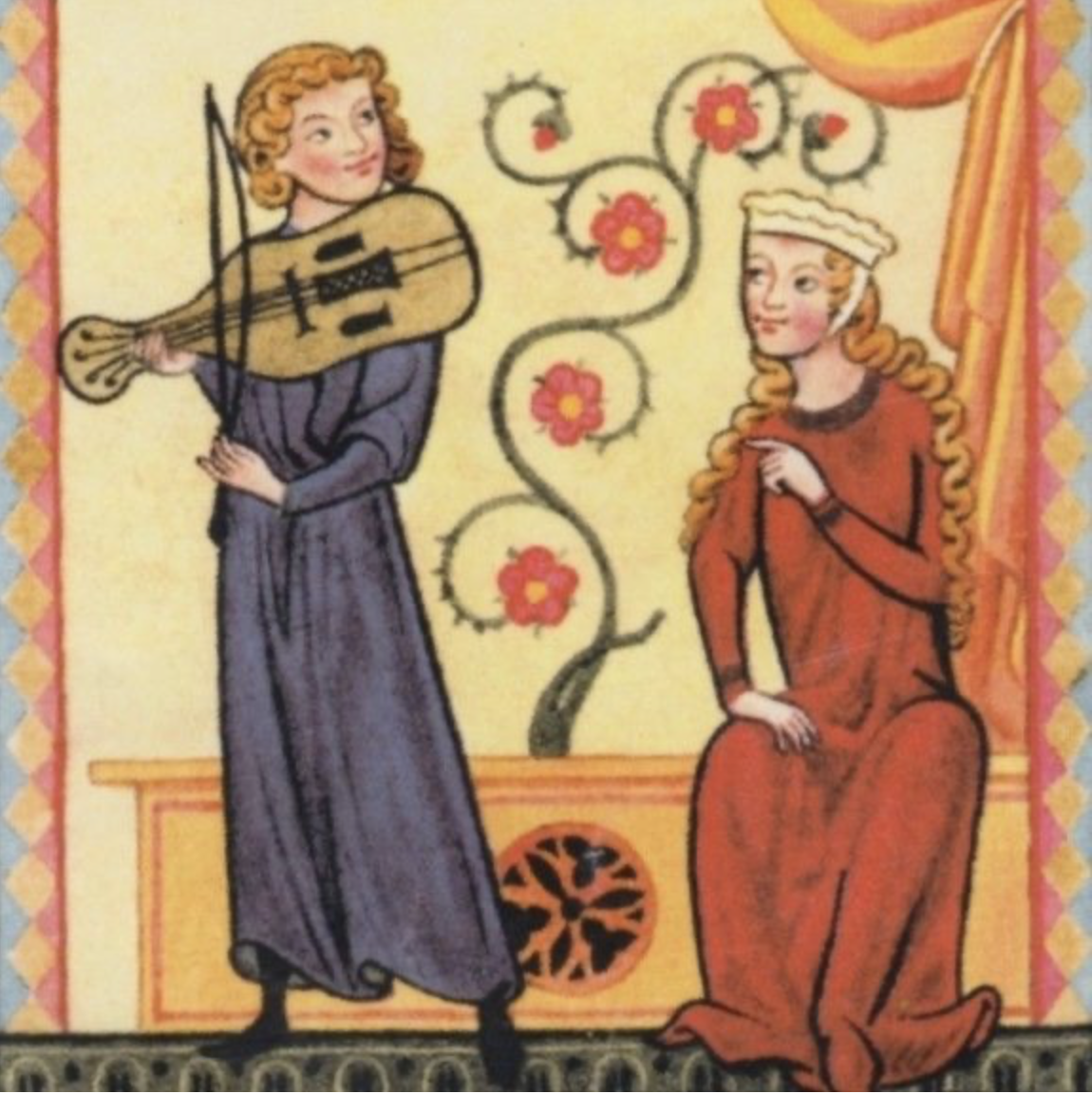
31 May 2023

The Alexiad

Nikephoros Bryennios the Younger (1062 - 1137) was a Byzantine noble. As a general, he defended Constantinople when the army of Godfrey of Bouillon attacked in 1097 during the First Crusade. He was also the second husband of Anna Comnena, the daughter of Emperor Alexios I Comnenos.

Anna's mother Irene Doukaina suggested he write a political history of the quarter century leading up to the coronation of his father-in-law, Alexios. It would largely be a "family history" of the Comnenos clan, and he gathered information for his "Material for a History." He drew on writings of contemporary historians such as Michael Psellos, John Skylitzes and Michael Attaleiates, covering many topics of which he would have no personal experience

Before the work was finished, Nikephoros died after becoming ill while on a military campaign in Syria. His widow, Anna, took the notes and turned them into The Alexiad, with a large focus on exalting her father:

I, Anna, the daughter of two royal personages, Alexius and Irene, born and bred in the purple. I was not ignorant of letters, for I carried my study of Greek to the highest pitch, and was also not unpractised in rhetoric; I perused the works of Aristotle and the dialogues of Plato carefully, ...

However, to resume—I intend in this writing of mine to recount the deeds done by my father for they should certainly not be lost in silence, or swept away, as it were, on the current of time into the sea of forgetfulness, and I shall recount not only his achievements as Emperor, but also the services he rendered to various Emperors before he himself received the sceptre.

The 15 chapters include not only the political rise and fall of emperors, but also the encounter with the "Frankish barbarians" of the Crusade, with details useful to modern historians:

For the Frankish weapon of defence is this coat of mail, ring plaited into ring[s], and the iron fabric is such excellent iron that it repels arrows and keeps the wearer’s skin unhurt. An additional weapon of defence is a shield which is not round, but a long shield, very broad at the top and running out to a point, hollowed out slightly inside, but externally smooth and gleaming with a brilliant boss of molten brass.

About 10 manuscripts of the finished work survive, some of them complete. Written in Attic Greek, The Alexiad gives us another version of the time period for scholars to study with some unusual traits. It is the only historical work written by a woman, and it differs radically from other histories because the author acknowledges feelings and opinions of the events discussed.

She virtually ignores her brother, John II Comnenos, who became emperor after Alexios. Anna, of course, wanted Nikephoros to succeed her father. Was John that bad an emperor? Was his reign worthy of being ignored in The Alexiad? Let's look at John II Comnenos next time.

30 May 2023

Anna Comnena's Rebellion

Anna Comnena (1083 - 1153) has had her own blog posts before (here and here). The daughter of Alexios I Comnenos and Irene Doukaina, she was betrothed at an early age to Constantine Doukas and raised by Constantine's mother (who had helped Anna's father and grandmother in the coup that put Alexios on the throne). Constantine was named junior emperor and heir to Alexios.

Unfortunately, her father and mother later had a male child, John, making the succession of Constantine unnecessary. Constantine died in 1094, and Anna then married Nikephoros Bryennios in 1097. Nikephoros was about 35, handsome and educated, and a good match for the highly educated and talented Anna. Alexios approved the marriage heartily, and granted Nikephoros the titles Caesar (a court title denoting favor) and Panhypersebastos. (Panhypersebastos, meaning "venerable above all," was a new title created by Alexios.)

When Alexios died (attended by Anna in the hospital he founded and she worked at), Anna would have liked Nikephoros to take over, rather than her brother John. Anna was raised in the presence of inspiring women who often took matters in their own hands to bring about large results. Her paternal grandmother Anna Dalassene helped the coup that put Alexios on the throne, as did her mother-in-law Maria of Alania. Her mother, Irene, although initially seemed to be in an unsatisfactory marriage, later became a strong partner to Alexios, accompanying him on expeditions and ruling firmly when he left her behind. In the latter cases, she was regent for John with Nikephoros Bryennios. It has been suggested that Irene wanted Nikephoros to be named Alexios' heir rather than their younger son.

Anna's and Nikephoros' previous titles and administrative authority, seniority in the family, and ambition may have led them to be involved in a plot to replace John. John suspected opposition, so as his father lay dying in the monastery of the Mangana on 15 August 1118, John took a retinue to the monastery and obtained the imperial signet ring from his father. One chronicler, Niketas Choniates, claims that John embraced his father as if in mourning and secretly stole the ring from him. John then rode with armed followers to the palace and forced his way in.

Alexios died that night. John II Comnenos did not attend the funeral, fearing a public appearance would offer an assassination attempt. In his first year, however, he claimed to discover a conspiracy involving his mother and sister. Anna's property was taken from her and given to a friend of John's, John Axouch, who declined it. Eventually it was given back to Anna, but Anna was effectively removed from public life. Irene was retired to a monastery,

Much of what we know of this period comes from The Alexiad, a book begun by Nikephoros Bryennios and completed by Anna Comnena. I want to dive a little deeper into it tomorrow.

29 May 2023

Maria of Alania

The Unified Kingdom of Georgia in the Middle Ages stretched from the Black Sea to the Caspian Sea. When it was conquered by the Byzantine Empire, the daughter of its then ruler, Bagrat IV, was taken to Constantinople as a hostage in 1056. She was five years old. Martha of Alania, called Maria in Constantinople, was raised and educated by the Empress Theodora; when Theodora died a year later, Maria was sent home.

In 1065, to further unite Georgia and the empire, Maria was married to Michael VII Doukas, who was in line to become emperor in 1071. Unfortunately for Michael, his reign experienced military disasters and economic woes, and in 1078 a coup replaced him with Nikephoros III Botaneiates. Michael was forced into a monastery and became a monk, and Maria with her young son Constantine was sent to a monastery (but did not become a nun).

Nikephoros was widowed while in office, and his intention to remarry started a fierce competition among all the eligible noblewomen. He settled on Maria for several reasons: marrying her would assuage the hostility of her Doukas relatives after the ouster of her first husband; her foreign birth meant she had no blood relatives who would try to use her empress status as a way to garner power for themselves, and she was a known beauty:

And certainly she was as slender of stature as a cypress, her skin was white as snow, and though her face was not a perfect round, yet her complexion was exactly like a spring flower or a rose. And what mortal could describe the radiance of her eyes? Her eyebrows were well-marked and red-gold, while her eyes were blue. Full many a painter's hand has successfully imitated the colours of the various flowers the seasons bring, but this queen's beauty, the radiance of her grace and the charm and sweetness of her manners surpassed all description and all art. Never did Apelles or Pheidias or any of the sculptors produce a statue so beautiful. [from the Alexiad]

She was still married to Michael, however, and the Orthodox Church considered a marriage to Nikephoros to be adulterous. The first priest who was asked to perform the marriage refused (and was demoted), but the next one was willing to accommodate the couple. Nikephoros agreed as part of the marriage pact to make her son from her first husband the heir to the empire, but he later went back on his word.

She allied with Anna Dalassene, and adopted her son Alexios in order to give him closer ties to the palace and the emperor; this allowed Anna and Alexios and Maria to plan to replace Nikephoros. Maria would have liked her son to become emperor, but he was still a child, and when the coup took place in 1081, Alexios became emperor. Alexios made Constantine his heir, even betrothing his own daughter Anna Comnena to the boy. Maria was treated well and remained in imperial quarters at Mangana, a suburb of Constantinople. As mother of the imperial heir, she lived a lavish lifestyle, making donations to a monastery and building a convent at Jerusalem. She was a patron to literary figures.

When Alexios and his wife bore a son of their own, however, the betrothal between Anna Comnena and Constantine was called off, Constantine was declared no longer heir, and Maria was retired to a monastery. Constantine died in 1096. Maria died in 1118, remaining an important figure to her fellow Georgians.

About the Alexiad that wrote so glowingly about Maria: it was written by Anna Comnena, Alexios' daughter, and we're going to look at her next time.

28 May 2023

Rebellion in Constantinople

Alexios I Comnenos might not have made it to the position of Byzantine emperor if not for the behind-the-scene actions of his mother, Anna Dalassene. She endeavored early in the lives of her children to make politically advantageous marriages for them and help them get to useful positions, such as when she helped Manuel and Alexios become leaders in the army.

In 1081, an opportunity arose to take power from the current ruler of the Byzantine Empire, Nikephoros III Botaneiates. His empress, Maria of Alania, had originally been married to the previous emperor, Michael VII Doukas, and wanted her son by Michael, Constantine, to succeed. Nikephoros wanted instead to be succeeded by a close relative. Anna forged an alliance with Maria against Nikephoros, an alliance with a precedent: Anna's son Alexios was married to Maria's cousin Irene.

Anna allowed Empress Maria to adopt Alexios. This made her son Constantine and Alexios brothers, which allowed Alexios to come and go in the palace as "family" and be fed information from Maria about Nikephoros' plans. Alexios and his brother Isaac also pledged loyalty to Maria's son Constantine (who was just a child).

In February 1081, Isaac and Alexios left Constantinople to raise an army against the emperor. Anna had the rest of her children join her in the Hagia Sophia for sanctuary. She protested that her sons were innocent of the accusations that they were committing treasonous actions, and pleaded for the emperor's protection for her family. She claimed they had learned of a plot by enemies to have Isaac and Alexios blinded, and the boys had therefore fled to safety. She managed to get the emperor to publicly grant protection to her family. Her actions not only gave her sons time to raise an army but also convinced the emperor that there was no danger of a coup, leading him to be less guarded about their actions.

Isaac and Alexios returned to Constantinople on 1 April 1081 with their army, and Alexios assumed the throne on 4 April. Maria's son Constantine was only 7 years old at the time, so too young to assert a claim to the throne against Alexios' claim, but Alexios gave him the title junior emperor, which had to satisfy Maria.

Regarding other titles, however: it was typical for the emperor's wife to be also crowned and given the title "Augusta." Alexios' wife, Irene Doukaina (of the Doukas clan), was not crowned until a week later. Alexios then gave the title Augusta to his mother! Former empress Maria was allowed to live on in the palace thanks to her help in the coup and the fact that she was alone and far from home (Alania was in Georgia).

Alexios preferred to take personal control of the army, and so was often away from the capital, leaving his mother in charge of matters. She was still managing many administrative matters when the First Crusade came through, but she retired to a monastery not long after, and died on 1 November in 1100 (or 1101 or 1102: the year is unclear).

While on the subject of Byzantine women: Maria of Alania is worth looking at in more detail. She came from the newly unified kingdom of Georgia, was married to two emperors and took part in overthrowing the second to raise up a third. I'll talk about her tomorrow.

27 May 2023

Anna Dalassene

"Behind every great man is a woman" was never more apt than in the case of the Byzantine Emperor Alexios I Comnenos and his mother, Anna Dalassene. She was born c.1025-1030 to a Byzantine official named Alexios Charon (about whom her biography says little) and a member of the noble Dalassenos family.

She was married to John Comnenos, younger brother of Isaac I Comnenos, who rebelled in 1057 against the current emperor and took the throne. This placed John himself (and therefore Anna) closer to the seat of power, and may have served to increase her ambitions for her children.

She and John had eight children. When Isaac decided to abdicate the throne to become a monk, John declined the throne, despite Anna's vehement urging about the benefits the position would create for their children. The throne went to Constantine X Doukas, whose family Anna then considered a rival that must be opposed.

Constantine died in May of 1067, the throne passing to Romanos IV Diogenes. John died 12 July of that same year, and Anna became responsible for raising the children and finding opportunities for them. She allied herself with Constantine's widow, with whose help she arranged politically advantageous marriages for her children. She also allied herself with Romanos, supporting him against the Doukas clan. Anna's youngest daughter, Theodora, was married to Romanos' son. Her eldest son, Manuel, became one of Romanos' best generals. (Manuel died from infection in 1071, and she tried to put Alexios forward as a suitable replacement in his position, but Alexios was considered too young at the time.)

Romanos IV was captured by the Seljuk Turks in August 1071, and the Doukas clan returned to power with Michael VII Doukas taking the throne. When Romanos was freed from the Seljuks, the Doukas clan led troops against him, capturing him to prevent a return to power and blinding him. Anna was accused of supporting Romanos, even being brought to trial.

She was prepared. She boldly pulled a crucifix from under her cloak and said "Here is my judge and yours. Think of him before deciding and take heed that your decision is worthy of the supreme judge, who knows the secrets of men's hearts." She and her sons were exiled to the island of Prinkipos. After Romanos died and there was no chance of a rebellion coalescing around him, they were allowed to return from exile. Michael VII even seemed to try to win her over by allowing Anna's son Isaac to marry his wife's cousin. Also, Alexios was married in 1078 to the 12-year-old Irene Doukaina, niece of Constantine X Doukas.

So it looked like her desire for her children to be secure and successful was coming true. There was more to come, however, because in 1081 the Comnenos clan and Anna would pull off a coup d'état, the details of which you will read tomorrow.

26 May 2023

Emperor Alexios I Comnenos

Alexios I Comnenos (1057 - 1118) was the Byzantine emperor during the start of the Crusades. Since the Byzantines were a part of the old Roman Empire, and Christian, and a well-populated and economically significant city at the eastern end of the Mediterranean, Europeans saw them as allies and the gateway to the lands of the infidels who held the Holy Land.

The Crusades were not his only concern, however. As a young man, he and his brother, Manuel Comnenos, served with distinction against the Seljuk Turks, whose territory was right across the Bosporus. The empire also had trouble with Normans in the western Balkans. At one point, he refused to fight against a kinsman who was seizing control of Byzantine territory in Asia Minor for himself. This did not count against Alexios, however, because his abilities were too valuable, and he was needed to help deal with Robert Guiscard.

His father, John Comnenos, had refused the throne when the previous ruler, Isaac I Comnenos, abdicated to become a monk. The throne therefore went to Constantine X Doukas, followed by Romanos IV Diogenes, then Michael VII Doukas, then Nikephoros III Botaneiates, against whom Alexios conspired to take the throne himself. Alexios surrounded Constantinople with his troops, broke through the walls on 1 April 1081, and was crowned on 4 April. Nikephoros fled, but was captured and forced into monk-hood.

Alexios took on an empire that was in decline and face with content military threats at the edge of its borders. Alexios' military skills enabled him to strengthen the empire and recover lost territory. The First Crusade was sparked by his requests for aid against the Turks, as mentioned in this 2012 post. He got the help (some of which was better than others), but the Seljuks continued to be a problem throughout his reign. He was also plagued by the question of succession, his preference being for his son John II Comnenos, while his wife pushed for their daughter Anna and her husband.

I might get to the resolution of who succeeded Alexios, John or Anna, but I want to talk about another Anna: Alexios' mother. She was an important figure who had a significant role in helping his rebellion succeed, and we should look at her next.

25 May 2023

Kilij Arslan I

Kilij Arslan I (1079 - 1107) was the Sultan of Rum; it was he who had to deal with the Europeans of the First Crusade when they attempted to "free" the Holy Land from non-Christians in the late 1090s.

Prior to the First Crusade, however, he had his own set of difficulties. The Turks were organized in several different tribes that saw each other as rivals: Seljuks (Aslan's tribe), Danishmends, Mangujekids, Saltuqids, Tengribirmish, Artuqids, and Akhlat-Shahs. Upon the death of Arslan's father, Suleyman (d.1086), the Sultan Malik Shah I of Isfahan imprisoned him, seeing him as a potential rival. When Malik died in 1092, a quarrel among his jailers allowed him to escape, after which he assembled an army and set up a capital for himself in Nicaea.

In times of political rivalry, carefully chosen alliances become vital. A non-Turkish complication in this part of the world was the size and proximity of the Byzantine Empire. Nicaea was in Byzantine Territory, and Arslan was able to set up his capital there (relatively safe from his Turkish rivals) because of a strategic alliance.

Arslan married the daughter of Emir Tzachas, a Seljuk Turkish military commander. Tzachas had earlier in life become a significant member of Byzantine society, until he lost his position when Emperor Alexios Comnenos I came to power and dismissed him. He then became an enemy of the Byzantines. Arslan married the daughter, Ayşe Hatun, to strengthen his own power against the Byzantines.

Then there was a twist: Arslan received a communication from Alexios, claiming that Tzachas intended to usurp him. Arslan marched his army to Tzachas' location, invited his father-in-law to a banquet, and killed him. This simple act ingratiated him to Alexios. When the Crusade of 1101 captured Nicaea and sent Ayşe Hatun to Costantinople to be held for ransom, Alexios sent her back without a ransom, in order to honor his alliance with Arslan.

Kilij Arslan, whose name means literally "sword lion," drowned in 1107 while crossing the Khabur River to escape a losing battle against a rival. In January 2021, archaeologists found his grave in Silvan, in Turkey.

Emperor Alexios Comnenos' name keeps cropping up in discussions of the Crusades, and he should probably be discussed a little more, but that's for tomorrow.

24 May 2023

The Sword of the Lion

When the First Crusade approached the Holy Land, they were met by the Seljuk Sultan of Rum, Kilij Arslan I. His first encounter with the Europeans came when the Peasants' Crusade, led by Peter the Hermit, overran the castle of Xerigordon at Nicaea. They did so because Arslan sent his spies to give them the impression that the castle was easy pickings. In fact, it was inconsequential to him, but a German contingent raced to take their prize. Once they were settled in it, Arslan sent a force to besiege it and starve them out, knowing that the place had few supplies. He offered a choice: renounce Christianity and become captives, or be put to death.

The tables turned on Arslan after this, because the easy victory led him to believe that all the Crusaders would be easily handled. Unfortunately for him, a far more organized and strategy-oriented army was headed his way. He decided to refocus his attention on his rivalry with the Danishmend Turks, ignoring the soon-to-arrive actual First Crusade. 

As a result, he was away from Nicaea when the Crusaders besieged it in May 1097. Returning to Nicaea, he was defeated by the Crusaders on 21 May. Nicaea was then held by the Byzantines, and Arslan's wife and family were taken captive. She was sent to Constantinople to be held for ransom, but was returned without ransom (for reasons which are a separate chapter of Arslan's story).

Kilij Arslan means "sword lion," and he had a reputation for being a great soldier and leader, but in this case he decided not to go it alone and to ally himself with his Danishmend rivals (as he would later to deal with the Crusade of 1101), attempting to ambush the Crusaders at the end of June near Dorylaeum. The defensive line created by the disciplined Europeans, however, proved too strong for the Turkish mounted archers. The Turkish camp was captured on 1 July by the arrival of Bohemond with reinforcements. According to the Gesta Francorum, the Europeans gained respect for Aslan's tactics and soldiers, claiming "had the Turks been Christian, they would be the finest of all races."

Realizing he could not stop the conquest of the Holy Land, Arslan decided to spend his time on hit-and-run attempts on the Europeans. He also destroyed crops and water supplies in their path, but could not stop them. His experience here is what made him take the approach of the Crusade of 1101 much more seriously, but in that case he was facing a less-organized group that was easier to defeat.

Why, however, was his wife returned from Constantinople without the ransom the Europeans demanded? There were Byzantines in the Crusade, so clearly the Byzantines were enemies of Arslan. Or were they? I'll explain in the next post.

23 May 2023

The Battle of Mersivan

The Crusade of 1101 had high hopes: the First Crusade had already been successful, establishing the Kingdom of Jerusalem, and the Germans, French, and Lombards (joined by Byzantines from Constantinople) who set out as reinforcements at the request of Pope Paschal II thought they would be avoiding any serious battles. They were mistaken, however, when different groups of Turks banded together and met them at the Battle of Mersivan. The Turkish leader, Kilij Arslan I, had his forces push the invaders where he wanted them to go.

The westerners were then at a disadvantage in the Mersivan area, dealing with dry open land bereft of supplies that was more suited to the cavalry regiments of the Seljuk and Danishmend Turks. Over the several days of the battle, the Turks outmaneuvered the Crusaders at every turn, surrounding them on the very first day.

On day two, a raid by the German division failed, and they were cut off from the main army with no supplies or communication. After a relatively inactive third day, the next day saw Turkish reinforcements. The Crusaders tried to break out of their position, inflicting some damage to the Turks, but they failed to achieve their goal. The fifth day saw the Crusaders' camp captured. Shockingly, the knights fled, leaving behind families and priests to be killed or enslaved. The Lombards, mostly peasant class who did not have horses, could not flee and were largely wiped out, although some were captured and made slaves.

This defeat, and the rounding up and destruction of those who fled, taking place just a few years after the First Crusade, taught the Muslim world that the Crusaders were not invincible. The leader of the Turks, Kilij Arslan I, had redeemed himself after the losses brought by the First Crusade, and established a capital at Iconium. I'll tell you more about Kilij Arslan next time.

22 May 2023

The Crusade of 1101

Because the First Crusade was successful, in 1100-1101 several of those who had avoided going on the First (or started and turned back because of the difficulties in traveling such distances) decided to conduct their own Crusade. Because they had avoided the First, this Crusade is sometimes called the Crusade of the Faint-Hearted. Stephen, Count of Blois (1045 - 1102), fled from the Siege of Antioch, for instance, and was so strongly criticized that his wife refused to allow him to stay home. This new Crusade was an opportunity for him and others to redeem themselves.

Pope Urban had died before the First Crusade was completed, but his successor, Pope Paschal II, called for reinforcements to supplement the armies who remained in the Holy Land. His urging resulted in three separate groups deciding to take up the Cross.

One group was from Lombardy, led by the Archbishop of Milan, Anselm IV. They were untrained and undisciplined peasants who, when they reached Constantinople, pillaged the city (even killing Emperor Alexios I's pet lion) until they were gathered and shipped to a camp at Nicomedia.

A second group met them there in May 1101. These were led by Stephen of Blois and other nobles, bringing French, Germans, and Burgundians. They were joined by Raymond IV of Toulouse, who had been successful on the First Crusade and had been offered the position of "King of Jerusalem," which he refused (the title went to Godfrey of Bouillon).

The largest contingent in this combined army was Lombards, who wanted to march the army north where they could rescue Bohemond I of Antioch, who was held captive by a Turkish dynasty, the Danishmends. The Seljuk Turks, realizing that combining forces was necessary to defeat the intruders, persuaded the Danishmend Turks to join them. This proved disastrous for these new Crusaders, but that is a story for tomorrow.

21 May 2023

The First Troubadour

William IX, Duke of Aquitaine and Gascony (1071 - 1127), also Count of Poitiers, had a shaky start in life. He was the son of Duke William VIII of Aquitaine and his third wife, Hildegarde of Burgundy; but the duke's earlier marriages and divorces (and the very close relatedness of the parents) caused the Church to declare the young William illegitimate. William senior had to make a pilgrimage to Rome for approval from Pope Alexander II (who wasn't always so obliging in marital questions).

Our subject was also a Crusade leader, but not of a Crusade that gets talked about, or even included in the numbering system: it is simply called the "Crusade of 1101."

He invited Pope Urban II—who had called for the Crusade in November 1095—to his court for Christmas of that year, during which Urban urged William to take up the Cross. William was more interested, however, in whether his rival, Count Raymond IV of Toulouse, would go on Crusade, leaving Toulouse unguarded (he did). William's wife, Philippa of Toulouse, was Raymond's niece, and William thought she could make a claim to the territory. The pair did capture Toulouse in 1098, and were subsequently threatened with excommunication.

What William is most known for now, however, is his career as the first known troubadour. There are 11 songs attributed to him. A 13th century vida says of him:

The Count of Poitiers was one of the most courtly men in the world and one of the greatest deceivers of women. He was a fine knight at arms, liberal in his womanizing, and a fine composer and singer of songs. He traveled much through the world, seducing women.

He did in one song admit to deceiving two women. Several of his songs show an attitude toward women in the courtly love tradition, however, in that the subject is called midons, "master":

Every joy must abase itself,
and every might obey
in the presence of Midons, for the sweetness of her welcome,
for her beautiful and gentle look;
and a man who wins to the joy of her love
will live a hundred years.
The joy of her can make the sick man well again,
her wrath can make a well man die,

Orderic Vitalis tells us that he wrote and performed "witty measures" of his adventures on Crusade, but the only Crusade in which he participated, as mentioned, was the Crusade of 1101. I'll tell you what happened with that tomorrow.

20 May 2023

The Troubadour Styles

Troubadours originally referred to their songs as vers, but over time developed a set of several different specific types of composition. The vers was a love song that later took on the term canso. The newer identifiable genres include:

Alba (called an aube in German love songs or Aubade in French): a "dawn song"; the lament that dawn approaches and the man must depart before the lady's husband discovers them).

Comiat: a song renouncing the lover.

Canso de crozada: a song encouraging the Crusades.

Desdansa: a dance for sad occasions.

Devinalh: a riddle or cryptogram.

Gap: a boasting song.

Maldit: a complaint of a lady's behavior.

Planh: a lament on the death of an important figure (evolved from the Latin planctus, a lament).

Serena: a song expressing impatience, waiting for night to fall so one could join their lover.

Tenso: a debate between two poets.

Viadeira: a traveller's complaint.

Let's look at the man thought of as the original troubadour next time.

19 May 2023

The Female Troubadour

The word "troubadour" was masculine, and the feminine form was "trobairitz" (both singular and plural). The term was rarely used, and was first seen in a 13th century Occitan romance, Flamenca. Trobairitz wrote and performed for Occitan noble courts from 1170 to about 1260—significant because up until then known female composers only produced sacred music.

Almost all information we have about them comes from their own biographical lyrics. We know of only 20 or so female poets. They were outnumbered by troubadours by 20 to 1, and their surviving works are about 1% of the total musical works from the 12th and 13th centuries. In fact, of the works of trobairitz that have survived, we have perhaps only a single work from each, except for two women.

The Comtessa Beatriz de Dia (pictured here from a 13th century codex; Dia was a town in southern France) was born c.1140 and died c.1212. She left us 5 works—four cansos and one tenson—one of which is the only trobairitz work with musical notation. (In the case of troubadours, about 10% have musical notation intact.)

The other trobairitz who left us more than one composition was Castelloza, the wife of Lord Turc of Meyronne (in southwestern France). She wrote several cansos about Arman de Brion, whose status was higher than hers. She describes the pain of betrayal:

My handsome noble-natured dear,
I’ve loved you since the day you pleased me.
How great a fool I am is clear.
For you held back, while such love seized me
That I not once have turned away.
Though you repay my good with ill
I’ll stand my ground and love you still,
For love so has me in its sway
That I now doubt my life can offer. [source]

Cansos and tenson were only a few of the types of songs composed by the troubadours and trobairitz. There were also alba, devinalh, gap, planh, ensenhamen, and many others. I'll give you a list next time, in case you want to try your hand at some different styles of song.

18 May 2023

What Makes a Troubadour?

In the years 1100 - 1350, a type of musical performer arose called a troubadour. They did not call themselves troubadours; that term was first used in 1575 to refer to court poets of the 12th and 13th centuries. They almost always referred to themselves as chantaire, "singer." The term "troubadour" is assumed to come from Occitan trobador, from trobaire, "composer," which may be from Late Latin tropare, "to compose, to invent a poem."

The earliest known troubadour whose work has survived was Duke William IX of Aquitaine (grandfather of Eleanor of Aquitaine). He may not have been the first troubadour: it is possible that his political prominence helped him appear to be the start of a tradition, but he may instead have been just one example of an already thriving cultural event. The chronicler Orderic Vitalis records that William composed songs about his experience on the First Crusade. Order also gives us a first-hand account of William performing "many times ... with rhythmic verses and witty measures."

The troubadour phenomenon rose and fell. The 12th century began with few examples of activity, but the final decades saw a burst of output: almost half of the almost 2500 pieces (from a total of about 450 known names) that have survived come from the years 1180 - 1220. Beginning in western Aquitaine, it spread to eastern Aquitaine, then down to Toulouse and Provence. In the early 1200s it reached Italy and Spain.

Duke William was probably the highest-ranking member of society who could be designated a troubadour. Most described themselves as "poor knights," although there was Jaufre Rudel, prince of Blaye in southwestern France.

The troubadours had an "enemy" in the jongleur. The jongleur was not the juggler that the word has become, but was actually a minstrel. The difference is that the minstrel plays songs he has heard from others, although there may be an element of dancing and acrobatics. The troubadour is a poet-composer, a much higher calling requiring skill. Troubadours often wrote attacks on jongleurs. There were, however, many troubadours who also entertained in the manner of the jongleur.

The word troubadour is masculine; a female troubadour is a trobairitz. It would make sense to look at the phenomenon of the female composer in the troubadour tradition next.

17 May 2023

Peire d'Alvernhe, Poet and satirist

I mentioned that, for all our talk of courtly love in the Middle Ages, the only use of the actual phrase was in a single Provençal poem. The author of that poem was Peire d'Alvernhe, a troubadour born about 1130. He produced 21-24 poems (authorship can be difficult to determine) by 1170. He was known well-enough that Dante names him in the Divine Comedy.

An anonymous biographer tells us he was handsome and charming and wise, and that he spent time in Spain at the court of Alfonso VII of Castile and his son Sancho III. The biographer calls his poems the greatest poems ever except for the slightly later Giraut de Borneill. A contemporary of Peire's, Bernart Marti, wrote a poem in which he accuses Peire of entering a religious life but abandoning Holy Orders.

Not only did he abandon the religious life, he also abandoned the concept that brought us to this blog entry. The reference to courtly love is in a poem in which he praises love of the Holy Ghost over that of cortez amors de bon aire, "well-spirited courtly love." In this preference of spiritual over carnal love he (and others) followed the influence of one of the earliest troubadours whose name we can put to his poetry, Marcabru (active 1130 - 1150).

Of all Peire's poems, modern scholars have spent the most time and effort discussing a particular one: Chantarai d'aquest trobadors ("Song of wandering troubadours"), a sirventes or "service song" used by troubadours to address a particular subject for educational purposes. In this poem he describes a dozen known troubadours, criticizing their looks and their poetry before proclaiming himself their superior. Although critical, it is seen as a good-natured parody, and he ends by telling the listener that it was composed "while laughing and playing."

On the other hand, if the twelve other troubadours were not present to laugh along with their descriptions, would an audience be familiar enough with the others to understand that it was all in fun? On the other other hand, it does give us (as few pieces of medieval literature do) give us information about specific poets we might not otherwise have, allowing us opportunities to identify authorship for some of the troubadours' works.

Peire d'Alvernhe, Bernart Marti, Marcabru, Giraut de Borneill—we have many names of troubadours, but what did they have in common? What made a "troubadour" rather than just a poet? Let's talk about the troubadour life tomorrow.